Technology/ Surveillance / Automotive
Overview
Technology Rhetorics
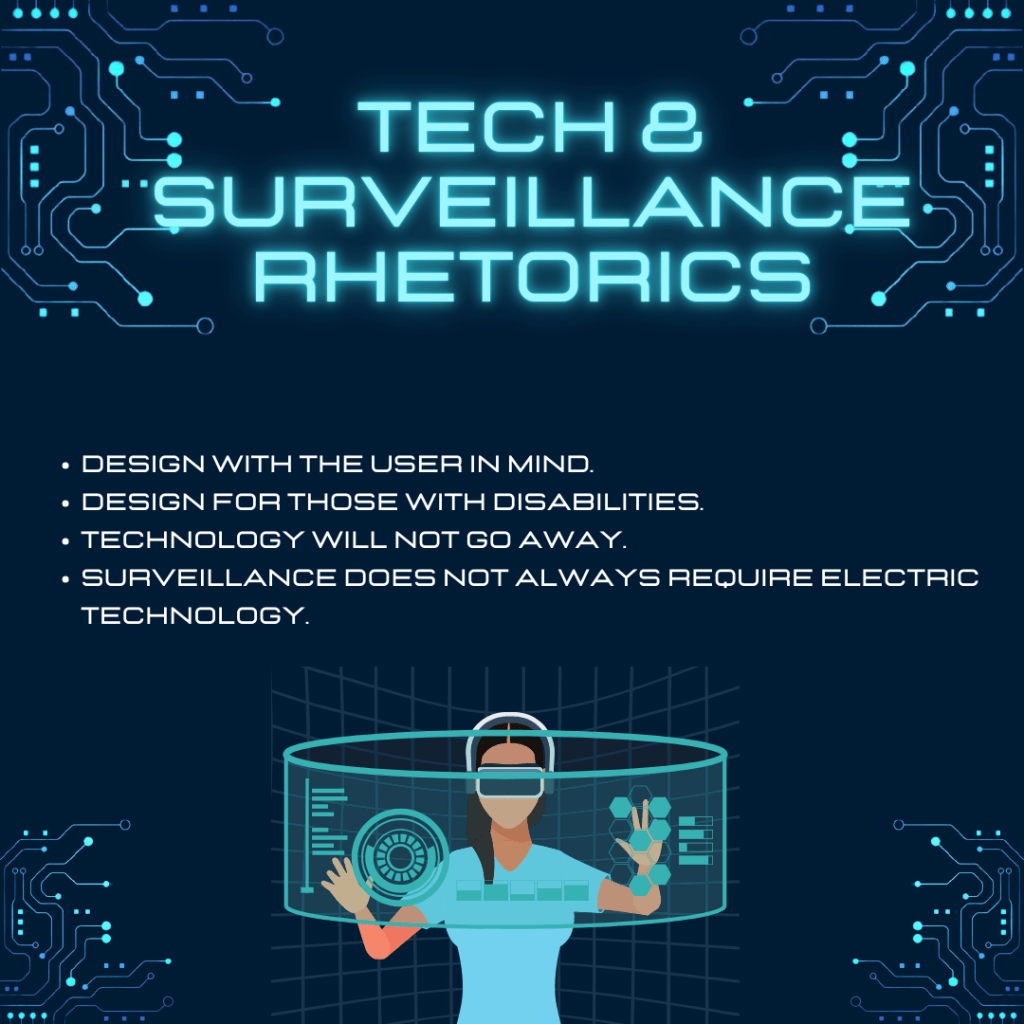
Technology Rhetorics explores how language and design influence the development, use, and perception of technology in modern society. This module examines how rhetoric shapes user experiences, interfaces, and accessibility, while also addressing the ethical implications of technological advancements. Students will critically analyze how technology impacts social structures, reinforces biases, and perpetuates systems of control or liberation. By engaging with topics such as usability, human-centered computing, and the balance between accessibility and design, this module equips learners to navigate and critique the intersection of technology and communication.
Surveillance Rhetorics
Surveillance Rhetorics looks into the language and strategies used to normalize and justify surveillance in both corporate and societal contexts. It examines how technology, psychology, and communication converge to create systems that monitor and influence human behavior. Through critical analysis, students will explore topics such as corporate surveillance, biometric identity checks, and the societal implications of a surveillance-driven culture. This module challenges learners to assess the ethical dimensions of surveillance and its role in shaping societal norms, privacy, and freedom.
Automotive Rhetorics
Automotive Rhetorics investigates the role of rhetoric in shaping the automotive industry, from technical writing and user experience to environmental and social considerations. You’ll see how language and communication influence the design, functionality, and accessibility of vehicles, as well as the broader societal impacts of automotive technology. Students will analyze the intersection of innovation, usability, and environmental justice, while critically examining how automotive advancements reflect and shape cultural and economic dynamics.
Research These
- Technical Writing
- Leah Buley: https://leahbuley.com
- Dynamic Instruction Scheduling (DIS)
- Very Large Scale Integration (VLSI)
- Panopticon Theory
- Afro futurism
- Confirmation Bias
- Anchoring in Psychology
- Social Psychology
- Zimbardo Prison Experiment
- Milgram Obedience Experiment
- Social Facilitation
- Biometric Identity Checks
- User Experience
- Information Architecture
- Boolean Search
- Corporate Surveillance
- Human-Centered Computing
- Accessibility vs Disability
- User Interface
- Digital Discrimination
- Usability Test
- Environmental Racism
- Edge Users
- AI Recruiting Tools
- Machine Learning
- Algorithms Of Oppression
- Freedom of Information Act
- ADA 1990
- 508 Compliance
- 504 Compliance
- The Conway Effect
- Internet of Things (IoT)
- How does modern technology train society for prison culture?
- Do research on jobs in tech that do not involve coding. What are the requirements for the job? How much do they pay? Contact me if you need suggestions.
Watch the Following
Read all of the Following
Ideas to think About
Automobile Rhetorics
Here are some discussion topics on automobile rhetorics:
1. Advertising and Branding Strategies:
– Analyze the rhetoric used in automobile advertising campaigns.
– Discuss how automakers create and maintain brand identities through language.
2. Safety Communication in the Automotive Industry:
– Explore how the automotive industry communicates about safety features and technologies.
– Discuss the impact of safety rhetoric on consumer choices and public trust.
3. Environmental Rhetorics and Sustainability in the Auto Industry:
– Analyze how automakers communicate about environmental initiatives and sustainability.
– Discuss the role of rhetoric in addressing environmental concerns and promoting eco-friendly practices.
4. Technological Innovation and Communication:
– Explore how the automotive industry communicates advancements in technology, such as electric vehicles, autonomous driving, and connectivity.
– Discuss the impact of technological rhetoric on consumer perceptions and market trends.
5. Consumer Reviews and Influencer Rhetorics:
– Analyze how automotive influencers and consumer reviews contribute to the rhetoric surrounding specific car models.
– Discuss the influence of user-generated content on public opinion.
6. Heritage and Tradition in Auto Branding:
– Explore how automakers use rhetoric to emphasize the heritage and tradition of their brands.
– Discuss the significance of brand history in shaping consumer loyalty.
7. Nationalism and Globalization in Auto Marketing:
– Analyze how automobile companies tailor their rhetoric for different markets and cultures.
– Discuss the role of nationalism and globalization in automotive communication.
8. Rhetorics of Luxury and Exclusivity:
– Explore how luxury car brands use language to convey exclusivity and premium status.
– Discuss the impact of luxury rhetoric on brand perception and market positioning.
9. Crisis Communication in the Auto Industry:
– Analyze how automotive companies handle communication during product recalls, safety issues, or other crises.
– Discuss the challenges and strategies for rebuilding trust after a crisis.
10. Rhetorics of Performance and Speed:
– Explore how sports car manufacturers use rhetoric to emphasize performance, speed, and driving experience.
– Discuss the influence of performance rhetoric on car enthusiasts and buyers.
11. Public Relations and Community Engagement:
– Analyze how automobile companies engage with communities through public relations initiatives.
– Discuss the role of corporate social responsibility rhetoric in the automotive industry.
12. Customization and Personalization Rhetorics:
– Explore how automakers use language to promote customization options and personalization features.
– Discuss the impact of personalized rhetoric on consumer preferences.
13. Historical Narratives in Auto Communication:
– Analyze how automakers use historical narratives to create connections with consumers.
– Discuss the storytelling aspect of automotive communication and its impact on brand loyalty.
14. Rhetorics of Future Mobility:
– Explore how the automotive industry communicates about the future of mobility, including electric vehicles, autonomous driving, and mobility services.
– Discuss the rhetoric surrounding the vision for the future of transportation.
15. Gender and Diversity Rhetorics in Auto Marketing:
– Analyze how gender and diversity are portrayed in automobile advertising and marketing.
– Discuss efforts to create more inclusive and diverse rhetoric in the auto industry.
Technology and Surveillance Rhetorics
Here are some discussion topics to explore in-depth:
1. Government Surveillance and National Security:
– Analyze the rhetoric surrounding government surveillance programs in the name of national security.
– Discuss the balance between individual privacy rights and the collective need for security.
2. Corporate Surveillance and Data Collection:
– Explore how companies collect and use data for targeted advertising and consumer profiling.
– Discuss the implications of corporate surveillance on privacy and consumer trust.
3. Surveillance in Public Spaces:
– Analyze the use of surveillance technologies, such as CCTV cameras, in public spaces.
– Discuss the impact on public safety, privacy concerns, and community perceptions.
4. Smart Devices and Internet of Things (IoT):
– Explore the rhetoric around smart devices and their potential for surveillance.
– Discuss the trade-off between convenience and privacy in the era of interconnected devices.
5. Government Transparency vs. Citizen Privacy:
– Analyze debates surrounding the transparency of government actions versus the privacy rights of citizens.
– Discuss how technology is used to hold governments accountable and potential drawbacks.
6. Social Media and Personal Surveillance:
– Explore how social media platforms enable personal surveillance and the creation of digital profiles.
– Discuss the impact on self-presentation, identity, and social relationships.
7. Biometric Technologies:
– Analyze the rhetoric surrounding biometric surveillance, including facial recognition and fingerprint scanning.
– Discuss the ethical considerations and potential misuse of biometric data.
8. Surveillance and Policing:
– Explore how surveillance technologies are employed in law enforcement.
– Discuss the impact on criminal justice, community relationships, and civil liberties.
 Jordan Wiggins