Religion / Asch Experiment / Milgrim Experiment

Overview
Read more: ReligionReligious Rhetorics explores the intersection of faith, language, and persuasion within religious and spiritual contexts. It examines how rhetorical strategies are used to shape beliefs, community, and influence social behaviors, both within and outside religious institutions. By analyzing the ways rhetoric can affirm, challenge, or manipulate faith-based narratives, students will develop a deeper understanding of how religion intersects with culture, ethics, and power.
Personal Quote: Just because your parents did it, does not mean you have to repeat their behaviors.
Task
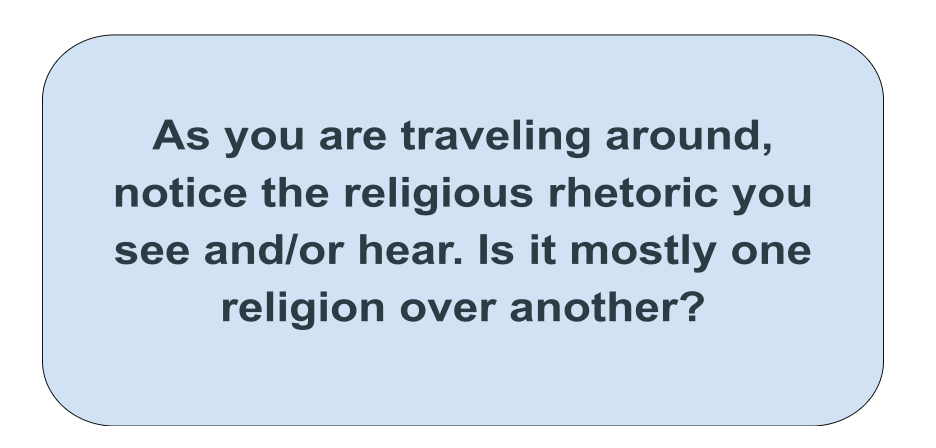

Note: You MUST include the following information for ALL of your sources: The Author; The Title; and the Year the article was published.
Not having these will resort in a ZERO
- Google the Definition
- Find a case scenario, example, or study on Galileo– provide author(s), title, and year published
Research These
- Maslow’s Hierarchy **For those who were not in the previous class**
- Critical Deconstruction
- Confirmation Bias
- The treament of diabled people by the Christian church
- Group Polarization
- Hoodoo Practices in the Black Church
- Voodoo Practices in the Catholic Church
- Asch Experiment
- Milgram Experiment
- Ritual
- Automatic Mimicry
- Normative Social Influence
- Social Facilitation
- Social Loafing
- Deindividuation
- Social Deviance
- Group Think
- Tituba
- Free Will or God’s Will?
- How does your religion treat “other” people?
- Do you really believe that God only wrote one book (if there is a book)?
- Ethics: A religious institution advertises FREE FOOD for those who are impoverished / displaced / unhoused / disadvantaged. In order to get this FREE FOOD, they have to participate in a religious service. Is this ethical?
Read all of the Following
Hiding Hatred Behind Religion by Reverend William Albers: https://www.counterpunch.org/2015/04/17/hiding-hatred-behind-religion
Watch the Following

Consider a Cause-and-Effect or Compare-and-Contrast approach.
Religious Phrases that must be Interrogated:
1. “God’s Will”: Analyze how this phrase is used in various contexts to justify actions or decisions, particularly in controversial situations.
2. “Crusade Against Evil”: Investigate how this phrase has been used in modern contexts, such as in political speeches or campaigns.
3. “An Eye for an Eye”: Examine the interpretation and use of this phrase in religious rhetoric, particularly in discussions of justice and retribution.
4. “Holy War”: Explore the use of this phrase in different religious contexts, including its justification for violence or conflict.
5. “Religious Freedom”: Analyze the rhetoric around this phrase in debates over issues like contraception, LGBTQ+ rights, and school prayer.
6. “Manifest Destiny”: Research the religious rhetoric behind this phrase and its use to justify the westward expansion of the United States.
Religious Words that must be Interrogated:
1. Blasphemy: Research how the concept of blasphemy has been used to suppress dissent or justify punishment in various religious contexts.
2. Heresy: Investigate the rhetoric surrounding heresy and how it has been used to label and persecute those with differing beliefs.
3. Jihad: Explore the controversial interpretations and uses of this word in religious rhetoric, both in traditional Islamic contexts and in modern extremism.
4. Martyrdom: Study how the concept of martyrdom is used in religious rhetoric to inspire followers or justify sacrifices, including in radical contexts.
5. Apostasy: Analyze the use of the term apostasy in religious rhetoric, particularly in its role in justifying punishment or ostracism of those who leave a faith.
Religious Events that must be Interrogated:
1. Anti-Abortion Rhetoric in the U.S.: Explore the religious arguments and language used by anti-abortion activists to advocate for the pro-life movement.
2. The Religious Justification for Slavery in America: Investigate how religious rhetoric was used to justify and perpetuate slavery in the United States.
3. The Crusades: Investigate the rhetoric used to justify the Crusades, focusing on religious motivations, propaganda, and the concept of “holy war.”
4. The Inquisition: Study the religious rhetoric used by the Catholic Church to justify the persecution and punishment of heretics.
5. The Salem Witch Trials: Analyze the religious rhetoric that fueled the witch hunts and trials in colonial America.
6. The Scopes Monkey Trial (1925): Examine the rhetoric used by both sides in this trial over the teaching of evolution versus creationism in public schools.
7. The Westboro Baptist Church Protests: Look into the extreme religious rhetoric employed by this group, particularly in their protests against LGBTQ+ rights.
8. The Islamic Revolution in Iran (1979): Research the religious rhetoric used by Ayatollah Khomeini to overthrow the Shah and establish an Islamic state.
 Jordan Wiggins